"Evolut Valves: Initial Positioning Can Be Optimized for Future Coronary Access" - Michael O'Riordan
As transcatheter aortic valve replacement is edging toward being a consideration for younger, lower-risk patients. Researchers are beginning to think not only about achieving good clinical outcomes during the initial implantation but also about preparing the patient for future interventions, such as PCI. “The issue is that, unlike surgery where we actually remove the leaflets of the aortic valve and put the new valve in and then align the commissures properly, in TAVR, nobody has been paying attention to how the valve aligns with the native anatomy,” said lead author Gilbert Tang, MD, senior faculty of cardiovascular surgery at the Icahn School of Medicine at Mount Sinai. “The focus has been on achieving good outcomes and not whether we need to intervene down the road or to have coronary access in the future. Now, we know that the incidence of coronary artery disease in these younger TAVR patients is quite high. These patients will need to have PCI or at least a diagnostic cath at some point in their lifetime.”
— Gilbert Tang, MD, Surgical Director, Structural Heart Program, Senior Faculty, Cardiovascular Surgery, Icahn School of Medicine at Mount Sinai

Mount Sinai Scientists Uncover Link Between Influenza and Heart Disease
Feb 09, 2026 View All Press Releases
Scientists Develop a Smarter mRNA Therapy That Knows Which Cells to Target
Dec 15, 2025 View All Press Releases

After a Heart Attack, the Heart Signals to the Brain to Increase Sleep to Promote Healing
Oct 30, 2024 View All Press Releases
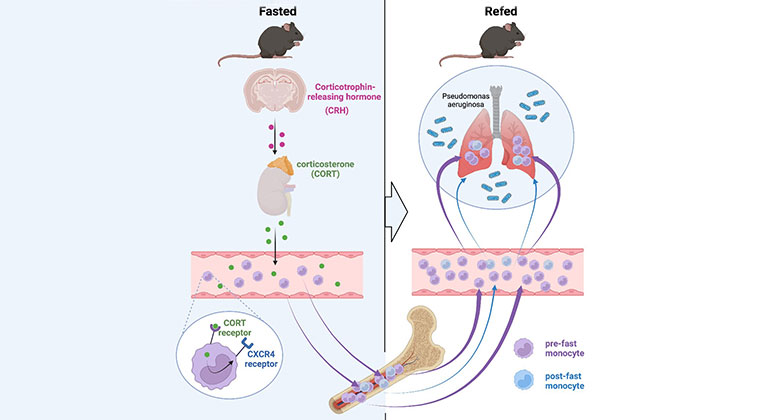
Skipping Breakfast May Compromise the Immune System
Feb 23, 2023 View All Press Releases
Valentin Fuster, MD, PhD, Named President of Mount Sinai Heart
Oct 18, 2022 View All Press Releases.jpg)